
Two-question 題型|共 3 篇
- 1. 辨識題型、藍圖與開頭(你正在讀)
- 2. 主體段、結論與作文對照
- 3. 單問題、改寫與練習

Two-question 是我分數最兩極的題型。同樣是兩個問句,第 41 篇(Cam15-1:為什麼有些國家的人特別重視買房+這是好是壞)拿到 7.5,第 17 篇(Cam16-1:為什麼越來越多人想知道自己房子的歷史+怎麼查)和第 25 篇(藝人收入太高嗎+還有哪些工作該高薪)都只有 6.5。
回頭比較,拿高分的那幾篇都做到同一件事:一個問題一段,每段兩個點,開頭和結論都明確回應兩個問題。分數低的則是在開頭、或其中一題的回答上出了問題。這篇也一起整理架構很像的 Positive/Negative 單問題(第 6、39 篇,見第 3 篇)。Two-question 的麻煩在於組合變化很多:光是我寫過的就有「原因+好壞」「原因+方法」「原因+缺點」「同意+另一問」四種,很多人第一次看到「原因+好壞」或「同意+另一問」會不知道該分幾段。只要記住「一個問號一段」,大部分題目都能套進同一個骨架。
文中「第 N 篇」是我送出批改的順序編號;分數是批改老師給的四項小分和總分,分析是我自己對照 IELTS 公開評分標準寫的。
一、題型辨識:數問號,再看每個問號問什麼
Two-question 最容易辨識:題目最後有兩個問句。但兩個問句的組合很多種,每一種的段落主題都不同:
| 組合 | 題目常見問法 | 段二回答 | 段三回答 |
|---|---|---|---|
| 原因+解決 | Why is this the case? What can be done to solve this problem? | 兩個原因 | 兩個解決方法 |
| 問題+解決 | What problems does this cause? How can they be solved? | 兩個問題 | 兩個對應的解決方法 |
| 原因+影響 | What are the reasons? What effects does this have? | 兩個原因 | 兩個影響 |
| 原因+好壞 | Why might this be the case? Is this a positive or negative development? | 兩個原因 | 表態+兩個理由 |
| 原因+缺點 | Why might this be the case? What could be the disadvantages? | 兩個原因 | 兩個缺點 |
| 原因+方法 | What are the reasons for this? How can people do this? | 兩個原因 | 兩個方法 |
| 同意+另一問 | Do you agree or disagree? Which other … should …? | 表態+兩個理由 | 兩個答案 |
另外,Positive/Negative 單問題(Is this a positive or negative development?)只有一個問句,但架構跟 Agree/Disagree 幾乎一樣:開頭表態,兩個主體段各寫一個支持理由。
二、段落藍圖
Two-question:四段,一題一段
筆記裡我寫給自己的規則是:這種題型的架構永遠一樣——開頭改寫題目並帶出兩個問題;問題一寫剛好兩個點、放在一段;問題二也寫剛好兩個點、放在一段;結論分別摘要兩題的答案。
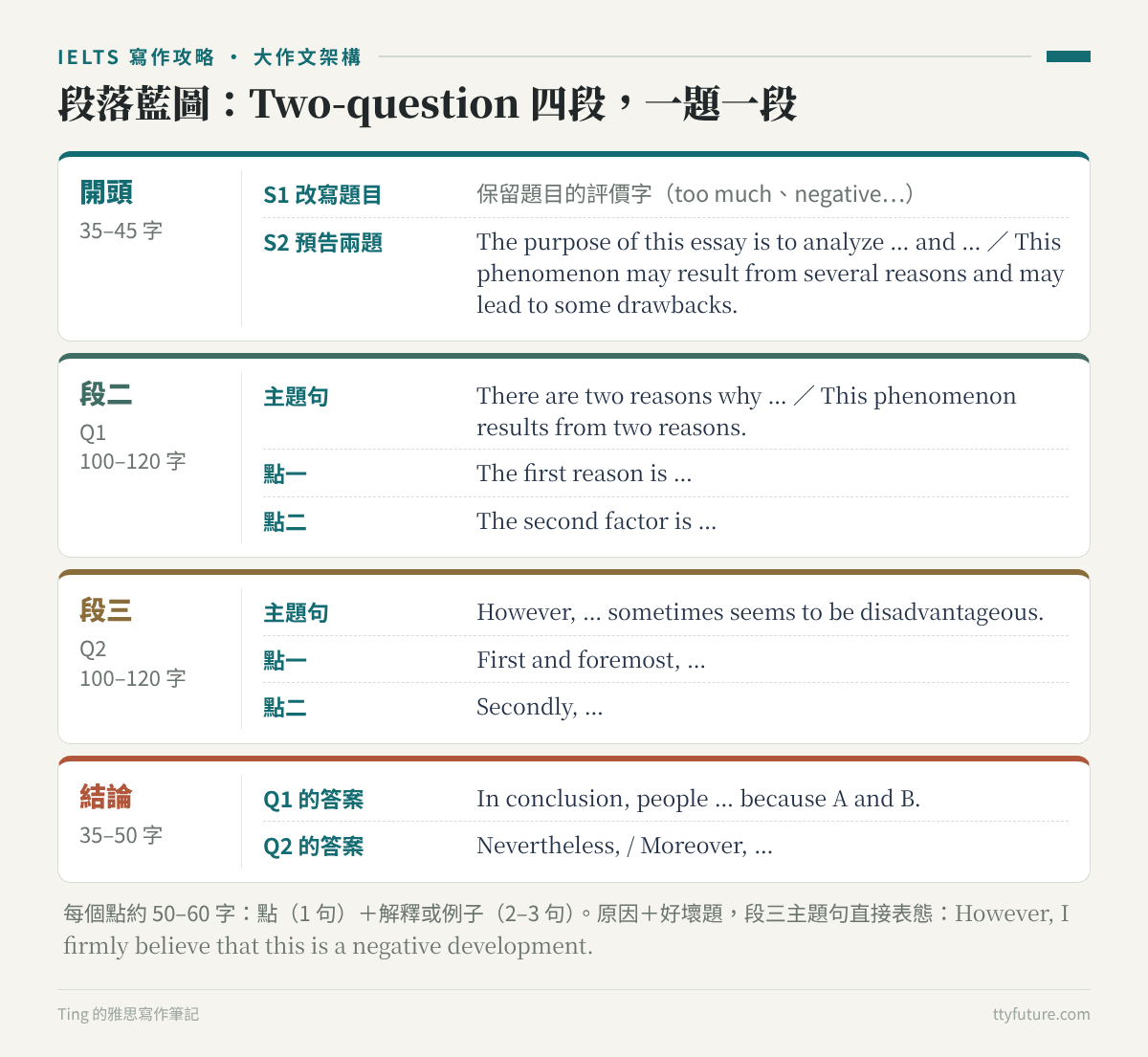
| 段落 | 內容 | 句型 | 字數 |
|---|---|---|---|
| 開頭 | S1 改寫題目|S2 預告兩題 | The purpose of this essay is to analyze … and … | 35–45 |
| 段二(Q1) | 主題句+點一+點二 | There are two reasons why … / This phenomenon results from two reasons. The first reason is … The second factor is … | 100–120 |
| 段三(Q2) | 主題句+點一+點二 | However, … sometimes seems to be disadvantageous. First and foremost, … Secondly, … | 100–120 |
| 結論 | Q1 的答案+Q2 的答案 | In conclusion, people … because A and B. Nevertheless, / Moreover, … | 35–50 |
Positive/Negative 單問題:四段,兩個理由同一立場
| 段落 | 內容 | 句型 |
|---|---|---|
| 開頭 | S1 改寫|S2 表態+兩個理由 | I firmly believe that this is a negative development because R1 and R2. |
| 段二 | 理由一(Point+That is+Example+小結) | The primary reason why I consider this is a negative development is that … |
| 段三 | 理由二(同上) | Another factor supporting my opinion is that … |
| 結論 | 重申+兩個理由 | In conclusion, I reiterate that … is a negative development. This is because … |

三、開頭第二句:讓讀者知道你會回答兩題
Two-question 的第二句有兩種寫法:「預告式」只告訴讀者你會回答哪兩題;「答案式」直接把答案摘要出來。兩種都可以,但「答案式」要小心句子太長。
| 組合 | 第二句句型骨架 |
|---|---|
| 原因+好壞 | The purpose of this essay is to analyze the potential reasons for this phenomenon and explain why I consider it a positive / negative development. |
| 原因+缺點 | This phenomenon may result from several reasons and may lead to some drawbacks. |
| 原因+解決 | This essay will look at the main causes of this problem and suggest some solutions. |
| 原因+影響 | This essay will discuss why this trend has occurred and what effects it may have on society. |
| 問題+解決 | This essay looks at some of the problems arising from …, and suggests some measures to address them. |
| 同意+另一問 | I totally agree with this view, and I think that jobs such as … deserve higher salaries. |
| Positive/Negative 單問 | I firmly believe that this is a positive / negative development because R1 and R2. |
我自己寫得好和寫不好的例子:
The purpose of this essay is to analysis potential reasons of this phenomenon and explain the reason why I consider this is an adverse development. (第 41 篇,7.5)
This phenomenon may result from several reasons and may lead to some drawbacks. (第 23 篇,7)
I firmly believe that this is because they want to get into their community or write some related articles, in addition, people can look for answers by searching on the Internet or asking the elderly. (第 17 篇,6.5)
第 41 篇的句子同時預告了「原因」和「我的立場(負面)」,兩個問題都照顧到了;文法上要修兩處:analysis 是名詞,動詞應為 analyze;consider this is 應改為 consider this(consider 後面直接接受詞+補語)。第 23 篇最簡潔,一句話對應兩題。
第 17 篇的問題比較多:第一,Q1 問的是「原因」,是客觀的事實分析,用 I firmly believe 顯得奇怪;第二,用逗號和 in addition 把兩個完整句子硬接在一起(run-on sentence);第三,一句話塞了兩題的四個答案,讀起來很吃力。這可能也是這篇 CC 只有 6 的原因之一。
繼續讀 · 第 2 / 3 篇
IELTS 寫作攻略導覽 · 大作文架構(第 8 / 9 篇)
← 上一篇:Problems/Solutions:原因、問題與解方一一對應的對應表寫法
下一篇 →:Positive/Negative Development:先定立場,再用兩個理由評價一個趨勢
✦ Target Your Future
有些日子,明明練了很久,成績卻還停在原地。希望這篇筆記能讓你知道,備考路上遇到挫折並不孤單。一次次重聽的錄音、改過的作文、終於敢說出口的句子,都是你已經走過的路。
把這些經驗寫下來,是想陪下一個正在準備的人少繞一點路。你不必照著我的方法前進,只需要慢慢找到適合自己的節奏。累的時候可以休息,再回來做今天能完成的一小步。
願你最後帶走的,不只是成績單上的數字,還有更相信自己、敢往世界走近一點的勇氣。
— Ting
← 回到 IELTS 備考筆記
Leave a Reply