
流程圖怎麼寫|共 3 篇
- 1. 題型辨識與被動語態(你正在讀)
- 2. 連接詞、Overview、名詞化
- 3. 改寫示範與扣分點
流程圖是我又愛又怕的題型。愛它,是因為它沒有數字可以讀錯,結構也最固定;怕它,是因為我四篇流程圖裡有兩篇 TA 只拿到 5 分:泡麵製程(Task 13)和製磚(Task 26),總分都是 6.5。另外兩篇寶特瓶回收(Task 9)和生質乙醇(Task 37)則拿到 7 分,乙醇那篇的 GRA 還有 8。
同一個人寫同一種題型,差這麼多,原因不是英文突然變好或變差,而是三件事:步驟有沒有漏、被動語態有沒有用對、每一步有沒有說清楚「發生了什麼」。這篇就照這三件事來拆。
好消息是,流程圖是最容易「穩定拿 7」的題型。它不需要估數字、不需要挑重點,只要每一步都寫到、文法用對,TA 和 GRA 就有基本盤。如果你的小作文常常在 6 和 7 之間擺盪,流程圖值得優先練熟,把它變成考場上的「安全牌」。
一、題型辨識:人工製程 vs 自然循環
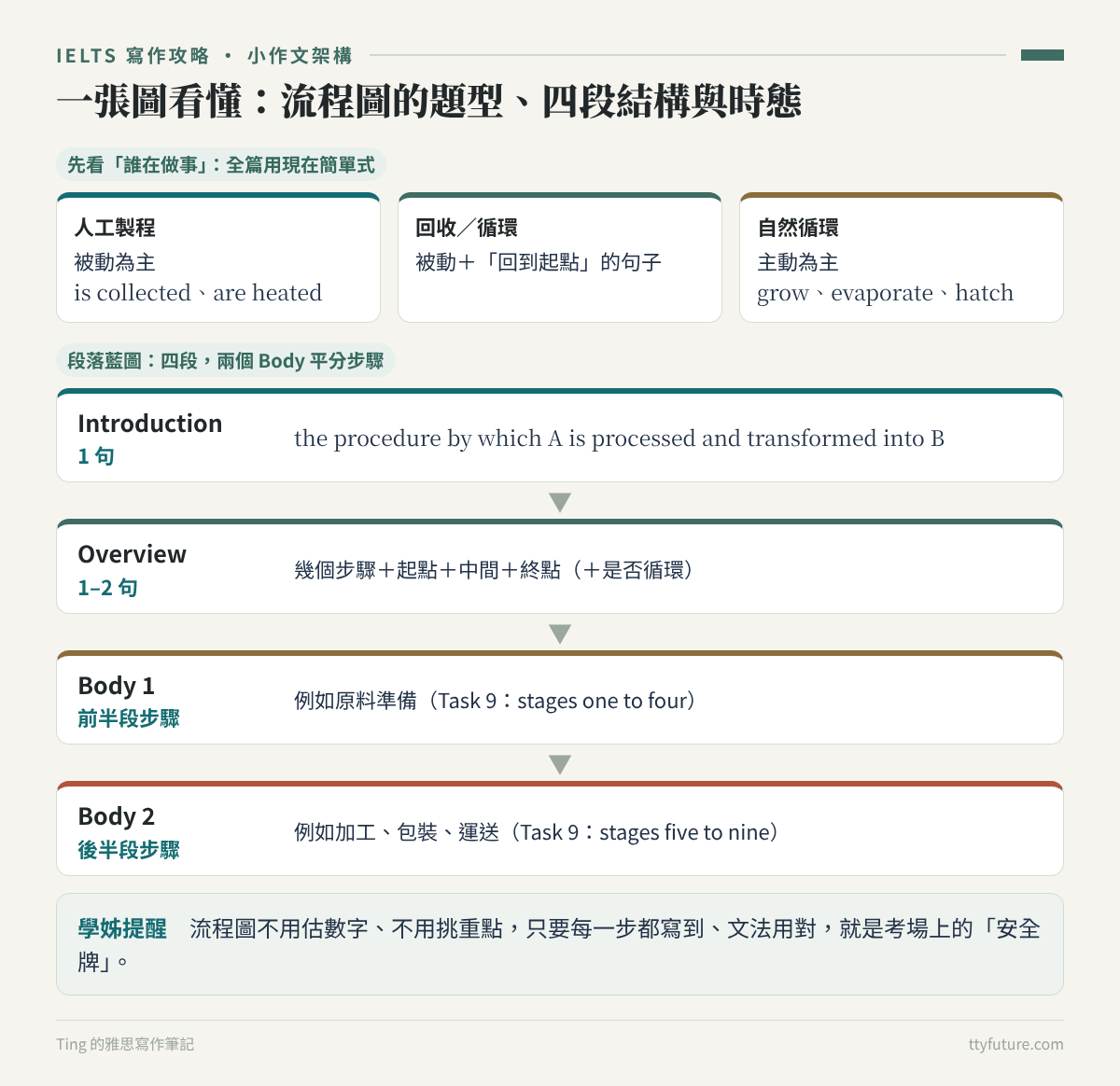
流程圖有兩大類,判斷方法是看「誰在做事」:
| 類型 | 特徵 | 主要動詞形式 | 我寫過的例子 |
|---|---|---|---|
| 人工製程 | 工廠、機器、人在處理某個東西,有起點和成品 | 被動語態為主:is collected、are heated | 泡麵製程(Task 13)、製磚(Task 26) |
| 回收/循環製程 | 人工製程,但最後一步回到第一步 | 被動語態+「回到起點」的句子 | 寶特瓶回收(Task 9) |
| 自然循環 | 生物、天氣、生命週期,沒有人在操作 | 主動語態為主:grow、evaporate、hatch | 生質乙醇(Task 37)前半段的植物生長 |
| 混合型 | 前面自然生長、後面人工加工 | 主動被動都有,要分清楚 | 生質乙醇(Task 37):植物生長→收割→加工→燃燒→二氧化碳回到空氣 |
四篇對照:為什麼兩篇 7 分、兩篇 6.5
| 篇目 | 小分(TA/CC/LR/GRA) | 我自己看到的差別 |
|---|---|---|
| Task 9 寶特瓶回收 | 7/7–8/7/7 | 九個步驟都有寫、最後有交代回到起點;文法錯誤多(are been、trunk、watched),但不影響理解 |
| Task 13 泡麵製程 | 5/7/7/7 | Overview 很完整,但第八步封口沒寫、第七步用 In this stage 帶過,步驟交代不完整 |
| Task 26 製磚 | 5/7–8/7/7 | 第二個 Body 很好,但第一個 Body 加了圖上沒有的意思,前三步描述不精確 |
| Task 37 生質乙醇 | 7–8/7/7/8 | 自然生長用主動、加工用被動,分得很清楚;循環也有寫到 |
四篇的 CC、LR 幾乎一樣,差別全在 TA。TA 5 的兩篇,問題都是「步驟的內容」:一篇漏寫、一篇亂寫。寶特瓶那篇文法錯得比泡麵那篇還多,TA 反而拿 7,因為每一步都交代到了。這給我一個很清楚的優先順序:流程圖先求完整、再求正確、最後才求漂亮。
二、段落藍圖:四段,兩個 Body 平分步驟
| 段落 | 內容 | Ting 原文開頭 |
|---|---|---|
| Introduction | 改寫題目:the procedure by which A is processed and transformed into B | The given picture illustrates the procedure by which plastic bottles are recycled and transformed into a variety of products.(Task 9) |
| Overview | 幾個步驟+起點+中間+終點(+是否循環) | Overall, the process includes nine stages, beginning with the collection of used bottles, going through the preparation of raw materials, and culminating in the production of several items.(Task 9) |
| Body 1 | 前半段步驟(例如原料準備) | Regarding stages one to four, in the first stage, …(Task 9) |
| Body 2 | 後半段步驟(例如加工、包裝、運送) | As regards stages five to nine, …(Task 9) |
Introduction 的三種說法
流程圖的第一句幾乎都可以用同一個骨架,只要換主角。我四篇用的都是 the procedure by which A is processed and transformed into B,好處是穩定,缺點是遇到「循環」或「自然生長」時會怪怪的(植物不是被 processed)。所以我建議準備三種:
| 情境 | 骨架(示範) |
|---|---|
| 人工製程 | The diagram illustrates the process by which clay is turned into bricks for the building industry. |
| 回收/循環 | The diagram shows how plastic bottles are recycled and made into new products. |
| 自然循環 | The diagram illustrates the life cycle of a salmon, from egg to adult fish. |
第二種用 how+子句,是最不容易出錯的寫法;第三種的 from … to … 直接把起點和終點放進第一句,Overview 就可以專心講階段數和循環。
Body 怎麼切?最簡單的方法是步驟數平分,例如九個步驟切成 1–4 和 5–9。更好的方法是依「階段」切,例如「原料準備」和「生產與包裝」,段落第一句就可以寫主題句:The first four stages involve collecting and preparing the bottles.(示範)。我當時常用 Regarding stages one to four 這種開頭,功能上沒問題,但少了「這一段在做什麼」的資訊。
三、核心文法:被動語態
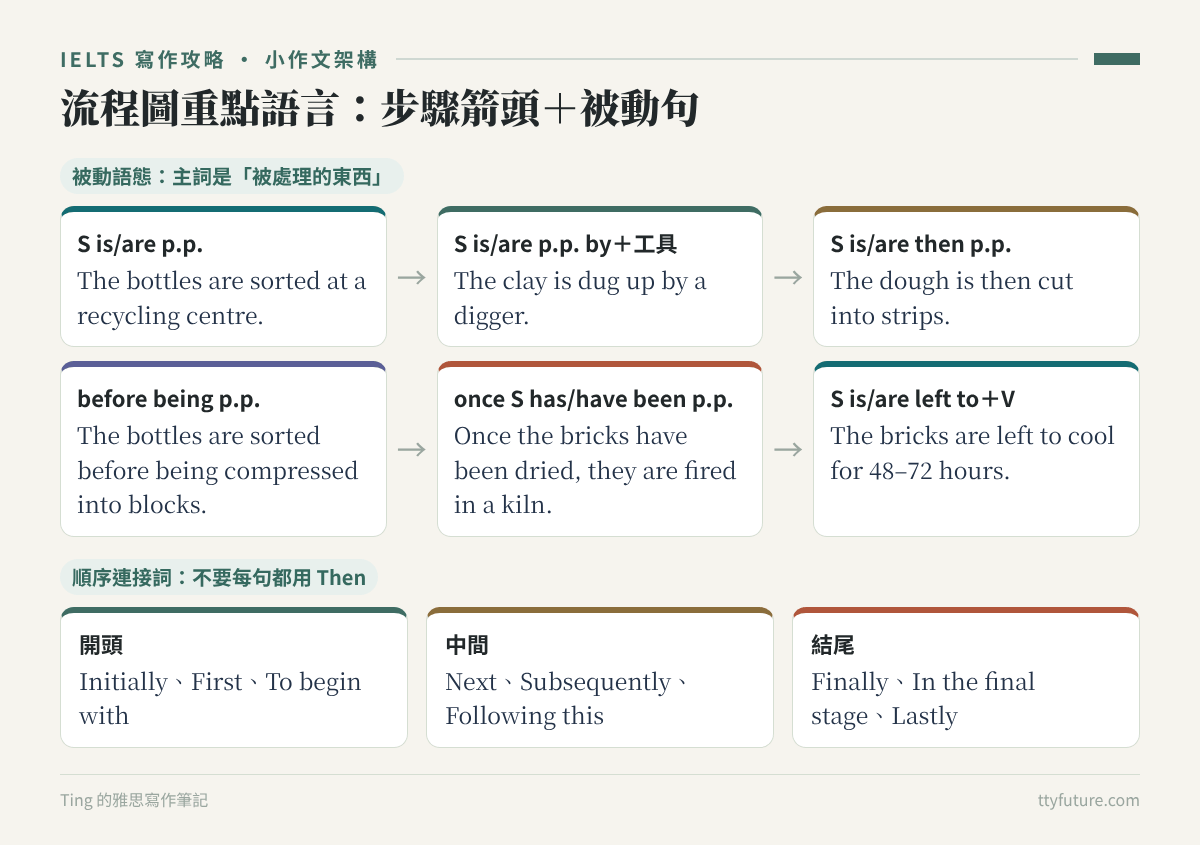
人工製程的主角是「被處理的東西」,不是機器或工人,所以句子主詞是瓶子、黏土、麵團,動詞用被動。基本公式只有一個:主詞+is/are+過去分詞。但實際寫的時候,會需要幾種變化:
| 句型 | 用途 | 示範 |
|---|---|---|
| S is/are p.p. | 最基本 | The bottles are sorted at a recycling centre. |
| S is/are p.p. by+工具 | 需要交代用什麼做 | The clay is dug up by a digger. |
| S is/are then p.p. | 接續上一步 | The dough is then cut into strips. |
| after being p.p. | 把兩步併成一句 | After being washed, the plastic pieces are melted into pellets. |
| before being p.p. | 把兩步併成一句 | The bottles are sorted before being compressed into blocks. |
| once S has/have been p.p. | 前一步完成後 | Once the bricks have been dried, they are fired in a kiln. |
| …, after which S is/are p.p. | 長句連接 | The flour is mixed with water and oil, after which it is rolled into sheets. |
| S is/are left to+V | 等待、靜置 | The bricks are left to cool for 48–72 hours. |
Ting 原文:被動語態的常見錯誤
→ 改法 Once the bottles have been compressed, they are crushed by a special machine …
(Task 9)are been 不是英文。被動是 are+p.p.(are crushed),完成被動是 have been+p.p.(have been compressed)。
✗ 原文 Those bottles are sorted in the recycling center before compressing into blocks.
→ 改法 The bottles are sorted at the recycling centre before being compressed into blocks.
(Task 9)瓶子不會自己壓縮,before 後面也要用被動:before being p.p.。
✗ 原文 … raw material are made, which are used to making a wide range of products …
→ 改法 … raw material is produced, which is used to make a wide range of products …
(Task 9)be used to+V 是「被用來做」;be used to+Ving 是「習慣於」,意思完全不同。
✗ 原文 The given picture illustrates the procedure by which the plants and tree are processed the transformed into ethanol …
→ 改法 The diagram illustrates the process by which plants and trees are processed and transformed into ethanol …
(Task 37)the 應為 and;plants and trees 前後要一致用複數。
繼續讀 · 第 2 / 3 篇
IELTS 寫作攻略導覽 · 小作文架構(第 5 / 7 篇)
← 上一篇:靜態圖怎麼寫?比例用語、比較句與 respectively 用法
下一篇 →:地圖題怎麼寫?時態判斷、改變動詞與方位詞
✦ Target Your Future
有些日子,明明練了很久,成績卻還停在原地。希望這篇筆記能讓你知道,備考路上遇到挫折並不孤單。一次次重聽的錄音、改過的作文、終於敢說出口的句子,都是你已經走過的路。
把這些經驗寫下來,是想陪下一個正在準備的人少繞一點路。你不必照著我的方法前進,只需要慢慢找到適合自己的節奏。累的時候可以休息,再回來做今天能完成的一小步。
願你最後帶走的,不只是成績單上的數字,還有更相信自己、敢往世界走近一點的勇氣。
— Ting
← 回到 IELTS 備考筆記
Leave a Reply